
Ⅰ
Core working principle of Heater Ptc
1. Positive temperature coefficient effect
PTC materials have low resistance at low temperatures, and when powered on, the current passes through and generates Joule heating, causing a rapid increase in temperature. When the temperature reaches its Curie temperature (i.e. the material characteristic threshold), the resistance value will increase exponentially (with a step change), causing the current to automatically decrease, thereby achieving constant temperature control.
2. Self regulating mechanism of Heater Ptc
-Low temperature stage: low resistance, high current, high heating power, and fast heating rate.
-High temperature stage: The resistance increases sharply, and the current and power automatically decrease, maintaining a stable temperature without the need for external temperature control system intervention.
Ⅱ
Structure composition and working mode
1. Typical structure
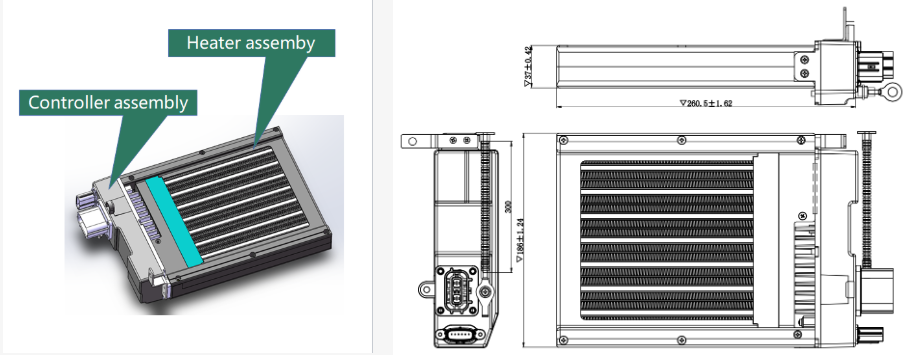
Composed of PTC ceramic heating elements (barium titanate based material), metal electrodes, heat sinks (such as corrugated aluminum sheets), and insulation layers, heat is transferred through thermal conduction or convection.
2. Common working modes
-Air heating: Using a blower to blow air through a PTC heating element, directly heating the airflow (such as in a car heating system).
-Liquid heating: First, heat the coolant, and then indirectly heat the air or water through liquid circulation (such as the temperature control system of new energy vehicle batteries).
Ⅲ
Key features and advantages
1. Safety performance
Equipped with automatic temperature limiting function, it can prevent overheating. The surface temperature is usually maintained at 200-250 ℃, without open flames or redness, avoiding the risk of burns or fires.
2. Energy saving and efficient
The heat conversion efficiency is over 95%, and the power will automatically adjust with the ambient temperature, avoiding energy waste.
3. Long lifespan and stability
Ceramic materials have the characteristics of corrosion resistance and oxidation resistance. Under normal use, their lifespan can reach more than 10 years, and they are less affected by voltage fluctuations.
Ⅳ
Typical application scenarios
-Home appliance field: covering electric heaters, air conditioners, hair dryers, water heaters, etc.
-Automotive field: including electric vehicle battery heating, cabin heating system, charging station defrosting, etc.
-Industrial field: involving drying equipment, pipeline heating, constant temperature bath, etc
Post time: Feb-28-2026


