
The traditional car cooling system relies on a mechanical water pump driven by the engine crankshaft, usually connected through a belt system. Although fully functional, these traditional pumps have inherent limitations, including fixed flow rates related to engine speed, mechanical wear issues, and efficiency limitations. As vehicles become more complex and electrified, these limitations prompt engineers to seek better alternatives.
Magnetic driven water pumps have emerged – this technology utilizes magnetic coupling to transmit power from the motor to the impeller without the need for direct mechanical connection. This seemingly simple change in design philosophy has produced significant benefits in multiple aspects of vehicle performance and reliability.
The core advantage of magnetic driven water pumps in automobiles
1. Improve efficiency and reduce energy consumption
One of the main advantages of magnetic driven water pumps in automobiles is significantly improved energy efficiency. Different from the traditional mechanical pump, the traditional pump runs at a speed proportional to the engine speed regardless of the actual cooling demand. The magnetic drive pump can be precisely controlled electronically to provide the best coolant flow according to the real-time heat demand.
This demand based operation can reduce energy consumption by 15-30% compared to traditional pumps. In internal combustion engine vehicles, this translates into fuel savings and reduced emissions. In hybrid and electric vehicles, efficiency improvement directly contributes to extended range – a key competitive factor in today’s market.
Magnetic coupling itself also improves efficiency by eliminating friction losses associated with shaft seals in traditional pumps. The reduction of parasitic losses further improves the overall energy efficiency of the vehicle.
2. Excellent reliability and extended service life
The advantage of magnetic driven water pumps in automobiles is significantly extended in terms of reliability indicators. Sealed design, without dynamic sealing between the motor and wet end, eliminates the most common fault point in traditional pumps: seal leakage. Without this weakness, magnetic driven pumps can achieve a lifespan three times longer than traditional pumps.
This sealing structure also prevents coolant from contaminating the motor components and prevents external environmental factors such as dust, moisture, and road debris from damaging the performance of traditional pumps over time. For vehicle manufacturers and owners, this means fewer malfunctions, reduced maintenance needs, and lower overall cost of ownership.
3. Accurate thermal management capability
Modern vehicles, especially electric and hybrid models, require complex thermal management to optimize battery performance, electronic component operation, and cockpit comfort. The advantages of magnetic driven water pumps in automobiles include unprecedented precision in coolant flow control, making advanced thermal management strategies that traditional mechanical pumps cannot achieve possible.
Capable of operating independently of engine speed and adjusting flow in real-time based on electronic commands, the magnetic drive pump facilitates:
Targeted cooling of specific components based on real-time temperature monitoring
Fast preheating cycle, improve efficiency and reduce emissions
Dynamically balancing thermal loads among multiple vehicle systems
Pre regulating battery systems in electric vehicles to optimize charging and discharging efficiency
These capabilities significantly contribute to overall vehicle efficiency, performance, and component lifespan.
4. Reduce noise and vibration
The advantage of magnetic driven water pumps in cars extends to the driving experience through significantly reduced noise and vibration. The elimination of mechanical shaft connections and seals results in smoother operation and reduces the number of components that generate vibration. In addition, electronic speed control allows the pump to operate at the lowest speed required by current conditions, further reducing noise generation.
This noise reduction is particularly valuable in electric vehicles, as the absence of engine noise makes other mechanical sounds more pronounced. A typical magnetic drive pump is 3-7 decibels quieter than traditional pumps, which helps create a more refined and comfortable cockpit environment.
5. Design flexibility and layout advantages
The compact and self-contained characteristics of magnetic drive pumps provide significant advantages for vehicle designers. Without the need to align with belt systems or mechanical drive components, these pumps can be placed in almost any position within the vehicle cooling system, allowing for more efficient layout and weight distribution.
This flexibility is particularly valuable in modern vehicles, as the space under the hood is extremely valuable due to the increase in electronic systems, emission control devices, and safety features. The advantages of magnetic driven water pumps in automobiles include the ability to optimize the layout of the cooling system without being limited by mechanical drive requirements.
6. Compatibility with advanced vehicle architectures
As the automotive industry transitions towards electrification, 48V electrical systems, and autonomous driving capabilities, the advantages of magnetic driven water pumps in cars become more apparent. These pumps are seamlessly integrated with modern vehicle electrical architecture and can be directly controlled by a central vehicle management system.
This compatibility makes the following possible:
Integration with predictive thermal management algorithms
Coordinate with other vehicle systems for overall efficiency optimization
Fault detection and diagnostic capabilities
With the development of vehicle software, pump control strategies are updated over the air
Actual application and performance
The advantages of magnetic driven water pumps in automobiles are not just theoretical – they have been proven in numerous mass-produced vehicles in various segmented markets. In high-end electric vehicles, these pumps contribute up to 5-7% range improvement through more efficient battery system thermal management. In high-performance applications, they achieve more consistent power output by maintaining optimal operating temperatures under harsh conditions.
Even in traditional internal combustion engine vehicles, the steering magnetic drive pump has produced measurable fuel economy improvements, especially in urban driving scenarios where traditional belt drive pumps typically circulate more coolant than necessary.
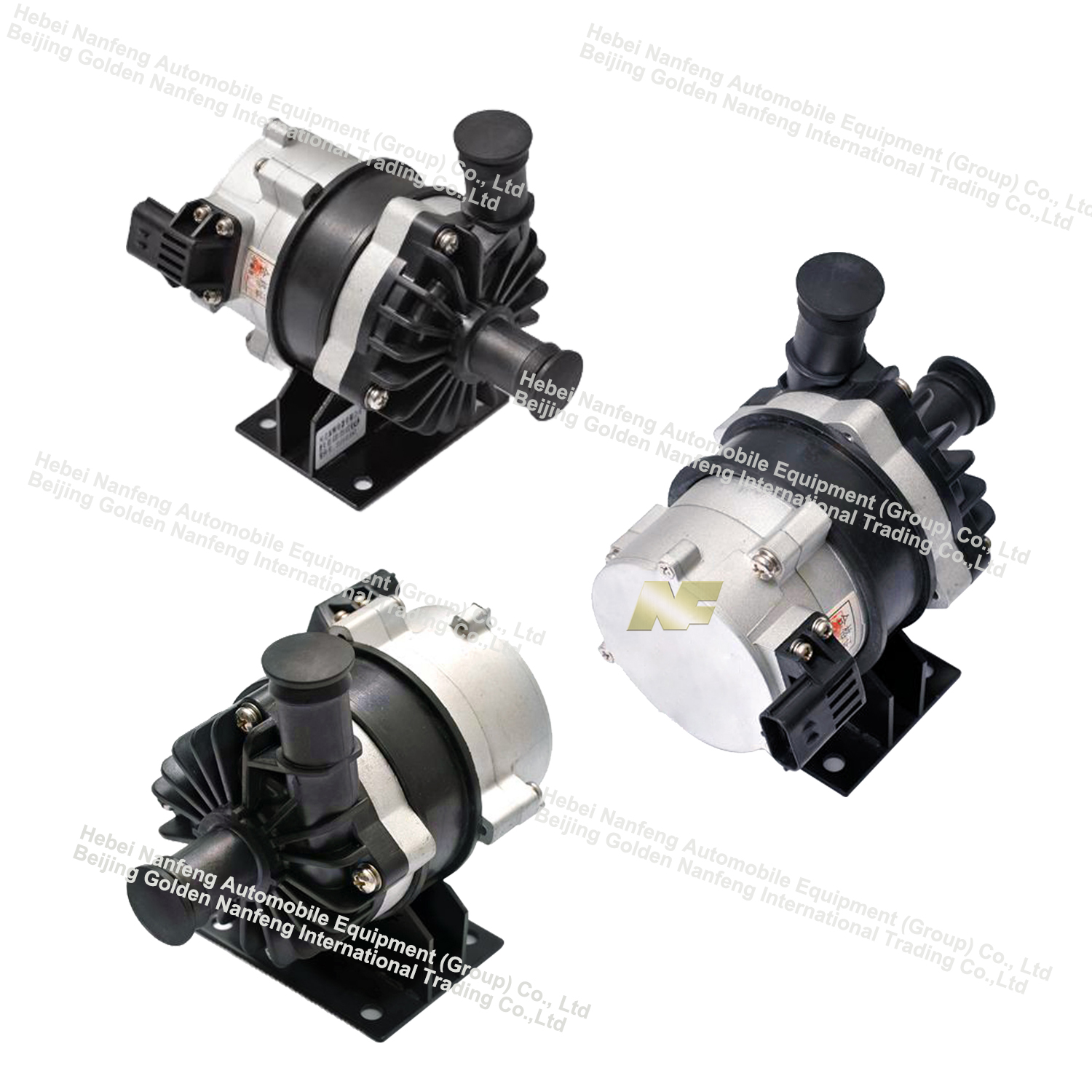
Our company’s water pumps are mainly used for cooling and cooling electrical appliances such as motors and controllers in new energy vehicles (hybrid and pure electric vehicles).
Adopting brushless motor with long lifespan
Low power consumption, high efficiency
Magnetic transmission has no water leakage phenomenon
Easy to install
Post time: Jul-27-2026


